Warming up and cooling down plays such an important role in your fitness routine, and may offer help in reducing the risk of injury and improving your athletic performance. Before you jump on the treadmill or lift those weights, do a short warm up first. And try following your workout with a quick cool down session. A warm up and cool down may add a few minutes to your exercise routine. But might also lower stress on the heart and other muscles.
Why you should warm up and cool down: Warm ups and cool downs generally mean doing your activity at a slower pace and lowered intensity. It helps get the body ready for aerobic activity. A warm up literally does what it says on the tin! It’s intended to prepare the body for the physical activity you are about to complete. This might be a gym session, cardio exercise, a sports training session or a competitive match. A warm up should always include some low-intensity aerobic exercise and stretching. To prepare your body for exercise a warm up should last from 5-10 minutes.
The cool down after your workout is all about lowering the body temperature and heart rate back to normal. A cool down will normally include very light aerobic activity and stretching. It will help the muscles to further relax and return back to their normal range of movement.
(Photo Credit: Luemen Rutkowski)
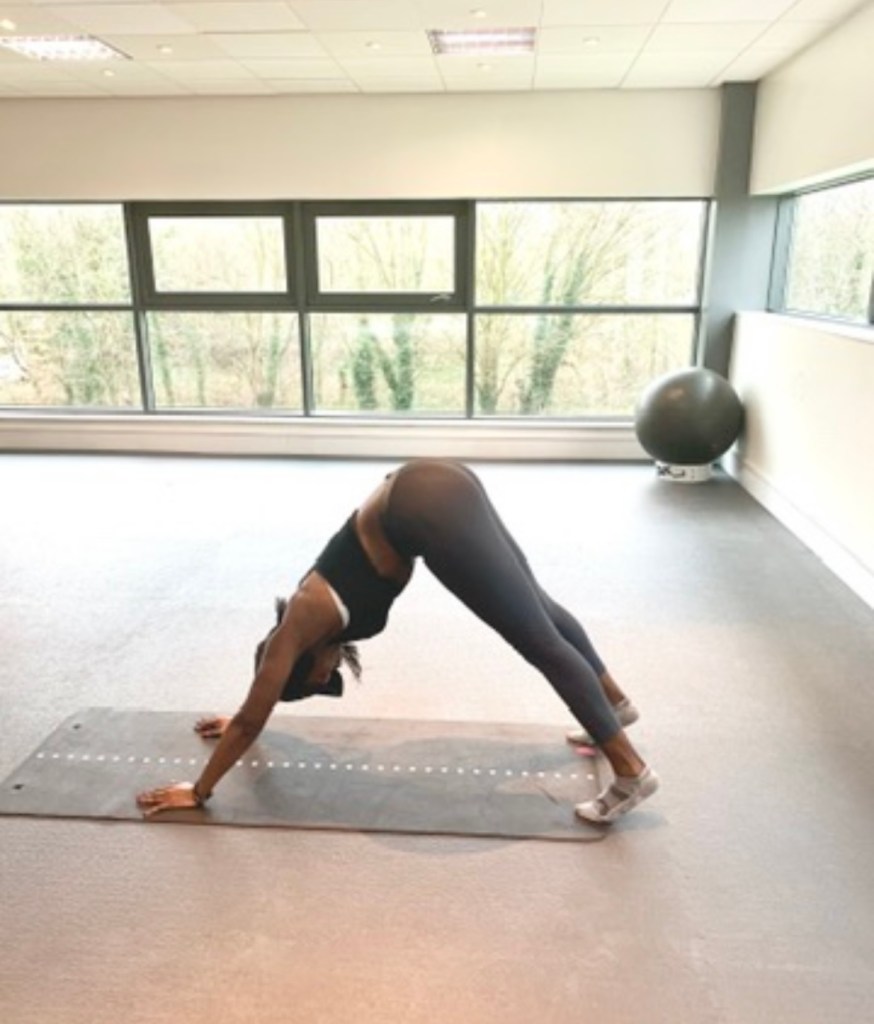
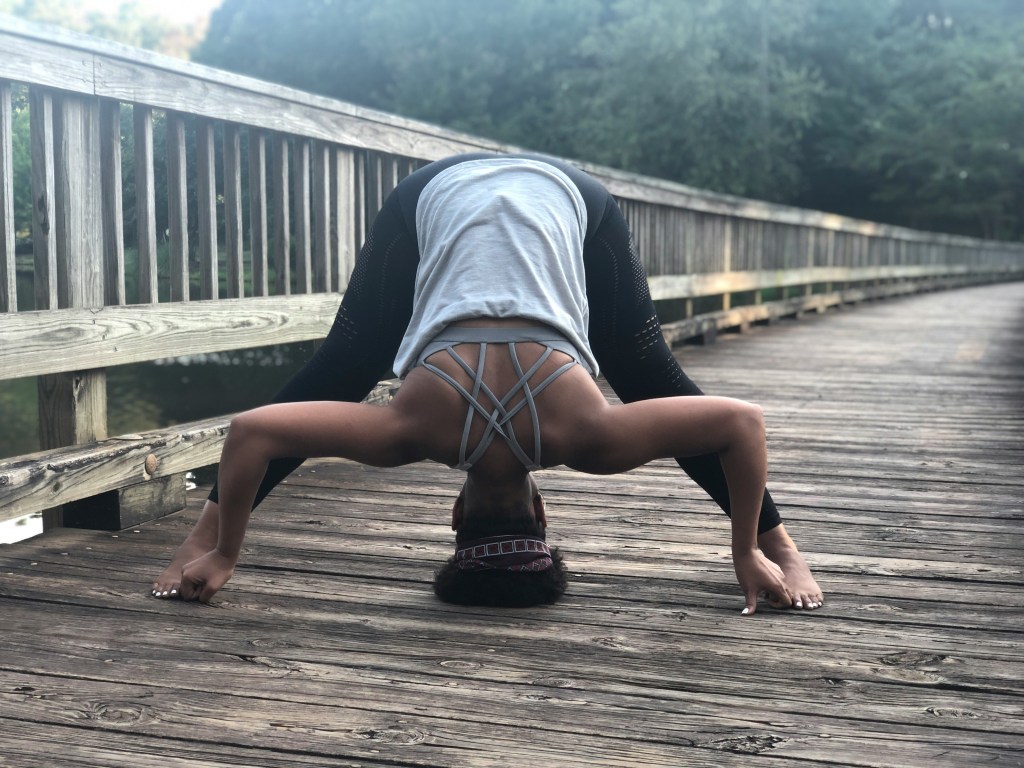
How to warm up and cool down: Warm up right before you workout. Focus on large muscle groups, such as the hamstrings. Then you can do exercises more specific to your sport or activity. Start at a low, slow pace that slowly builds in speed and intensity. A warmup may cause a little sweat, but generally won’t leave you tired.
(Photo Credit: Liveology Yoga Magazine)
Cooling down is similar to warming up. You generally keep doing your workout session for five minutes or so. But you go at a slower pace and lower intensity. Always cool down straight after your workout
Finding time for regular aerobic workouts plus warming up and cooling down can be hard. But with a little creativity, you can probably fit it all in. For example, you can walk to and from the gym for your warm up and cool down…depending on how far your gym is of course!
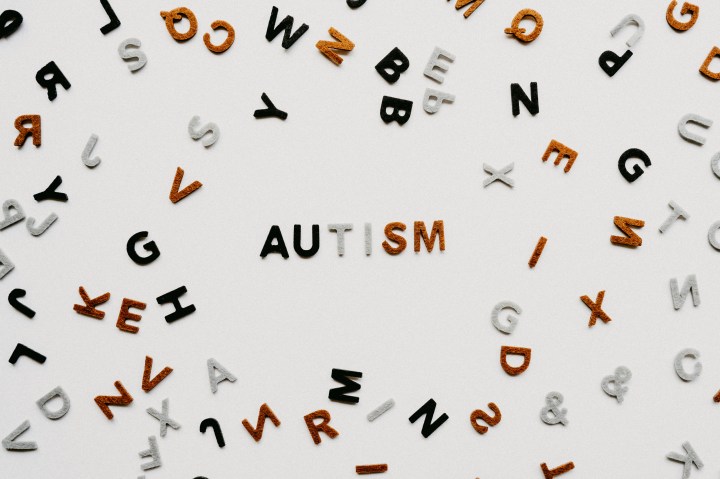
Autism, also known as autism spectrum disorder (ASD), is a lifelong developmental disability which affects how people communicate and interact with the world. More than one in 100 people are on the autism spectrum and there are more than 700,000 autistic adults and children in the UK.
People with autism may experience differences in social interaction and communication. With restricted interests and may have problems with learning. Their skills might develop unevenly, which often have a lifelong impact. Being autistic is not an illness. It means your brain works in a different way from other people. It’s a condition that you’re born with or first appears when you’re very young. Autism is not a medical condition with treatments or a cure. But some people need support to help them with certain things.
Jack Ivens said “I was first diagnosed when I was two years old in 1989. My mum was concerned that I was showing signs of regression (I had started talking early but then unexpectedly stopped and became fixated with just playing with my toy cars and not interacting with anyone. So, my mum took me to a doctor and after being tested, I was diagnosed.” Jack added “Part of the problem feels like there is a stigma attached still to autism and diagnosis and I feel people are still afraid of going to get themselves assessed for a neurodiverse condition and are suffering in silence because of it, greater, positive visibility with autism is key to demystify the condition and provide a more positive outlook.”
Diagnoses is believed to be on the rise and it is estimated that approximately four times as many boys are being diagnosed than girls. It is thought that for every three children with a diagnosis of autism there are another two children who have the condition but have not been given a formal diagnosis.
Doctor Sarah Lister Brook, Clinical Director at the National Autistic Society said “Every autistic child and adult is different, with their own strengths and varying challenges. It’s a good idea for parents to ensure they understand their child’s individual profile of autism, and that the young person or the adult themselves understands their own profile of autism too. Getting a diagnosis can help parents to access developmental guidance and family support, as well as the right education and the right therapeutic support for their child, if needed. Similarly, for adults a diagnosis can help bring clarity to why certain things have been challenging in their lives and enable them to seek the support and the adjustments they might need to have a more fulfilling life.”
Autism is such a wide-ranging condition meaning everybody with the condition is different. Some autistic people need little or no support and others may need that extra help from a parent or carer every day.
Jack explains “Take heart that there is a sea change, there is more understanding and knowledge about autism and other neurodiverse conditions than there has ever been before. Social media especially is a wonderful outlet for incredible information and autistic voices and there’s a real sense of community on certain platforms that I didn’t have growing up. Moreover, Covid-19 and the positive actions towards social justice over the past twelve years has brought to the forefront across many minorities (be it racial, homophobic, transphobic, ableist and so and so forth) the need to raise ones voice is vital in an effort to be heard. Never be settled with no, keep banging the drum and find a platform that works for you.”
As we are in March, Endometriosis Awareness Month, we thought we should highlight the chronic disease and use this opportunity for all to understand more about the condition. Endometriosis is the second most common gynaecological condition in the UK, affecting 1 in 10 women in the UK (1.5 million).
Endometriosis, also known as the ‘invisible illness’ is a long-term condition where cells similar to the ones in the lining of the womb (uterus) are found elsewhere in the body. Each month these cells react in the same way to those in the womb, building up and then breaking down and bleeding. Unlike the cells in the womb that leave the body as a period, this blood has no way to escape.
An estimated 176 million women worldwide suffer a life of pain of the disease and according to Endometriosis UK one in every 10 women live with the long-term health condition. That’s over 1.5 million women, which can also be felt for life. It can affect women of any age, regardless of their race or ethnicity and can have an impact on the quality of life and in some cases take women years to be diagnosed. Endometriosis can not only worsen if it goes untreated, but the condition can also have a huge impact on someone’s career, relationships, and mental health.
Abbie Stapleton said “When I was 14 I experienced my first episode of really excruciating pain, but this was before my period started which then came a year later. Every month I would have a period and be bed bound, unable to walk, fainting and nothing being able to ease my pain. I was sent back and forth to different health care professionals month after month and just being told that nothing was wrong.”
(Photo credit: cheerfullylive)
“My tests would come back clear and I was always dismissed as being the unlucky one with bad periods.” Abbie explains “It wasn’t until my pain became chronic in December 2018 that endometriosis started being investigated and when I did see a gynaecologist I was told I was way too young to ever have severe endometriosis. I then pushed for an MRI which actually came back with having deep severe endometriosis. My pain got worse where I was then put on the surgery list and I went onto have endometriosis excision surgery, after a year of being on the waiting list. I waited ten years to be diagnosed with endometriosis from the onset of my pain, symptoms and just going backwards and forwards to different health care professionals.”
Women living with endometriosis experience severe pain and bleeding. It may also lead to infertility. The most common symptom is pain in your lower tummy or back (pelvic pain), very painful and heavy periods as well as pain during or after sex. The condition may also trigger spotting or bleeding between periods, pain when going to the toilet, bloating, nausea, constipation and diarrhea. GP Dr Hilary Jones said “These symptoms are often put down to just period pains. Women often go for many years without the diagnosis being made. If your periods are very heavy or very painful then it’s always worth thinking about endometriosis as a possible cause. I would encourage women, that if they think it is endometriosis to go and seek help earlier rather than later”.
It is said that more than half of women have to visit a GP more than ten times before being referred to a specialist. Dr Hilary explains that “Most women’s period pain is predictable, manageable and easily treated with paracetamol or ibuprofen. When that doesn’t control the pains that you are getting, when the pain is more widespread goes down the thighs and into your back throughout the pelvis and lower abdomen, when it affects your normal activities and you have to take time off work, then it’s something that needs to be treated. No woman should be putting up with those symptoms and I say if it’s a possibility just go and get it checked out”.
Treatments include painkillers, hormone medicines, contraceptives, and surgery such as laparoscopy (keyhole surgery) and hysterectomy. Some women find these treatments ineffective and abandon medical treatment or seek alternative therapies. Nutritionist Lorna Driver-Davies said “There are lots of things you can do to change your diet and lifestyle, to recovery from treatment (surgical) and to get you in a healthier position looking at supporting hormones and the immune system which are the two key areas when managing the condition.” Lorna explains “Endometriosis can really affect the gut – with many women experiencing digestive issues, especially if endometriosis has been found on the intestines. This can lead to issues with nutrient absorption and imbalances of bacteria in the gut can also worsen the condition – so I advise taking a look at gut health if you have endo. Women with endo can have a history of heavy periods. So, every time you bleed you are losing nutrients. That’s why you see low iron and magnesium in women who’ve got endo, and these nutrients play a role in supporting your body and you feeling good.”
(Photo provided by Lorna Driver-Davies)
“It’s a multidisciplinary condition, everyone in health has a role to play including chiropractors and physiotherapists because it creates distortions in the body, for example organs can get twisted round and stuck together. The medical approach works incredibly well if you combine it with looking at diet and lifestyle.” She went on to say “You get a lot of mental health issues with Endometriosis, depression, low mood, anxiety partly that comes from not being listened to, women are still told that it is in their head that they have these painful problems. But also, that the same nutrients that would normally support the brain and mood, are prioritised by the body to manage pain and inflammation”
It is said that endometriosis costs the UK economy £8.2bn a year in treatment, loss of work and health care costs. Endometriosis Clinical Nurse Specialist Gilly Macdonald said “It’s not something that’s talked about and some symptoms can often be mistaken for other conditions. More research is needed. We need to increase awareness of endometriosis amongst health care providers and the wider community. We need to increase education and skills to recognise the condition, improving early diagnosis, treatments and access to specialist services.” Gilly explains “A cure for endometriosis has not yet been identified because the exact cause of endometriosis is still uncertain. It remains a poorly understood condition.”
There’s no better way than feeling healthy and full of energy. At the start of the year we decided to have a month of pure detoxification which involved cutting out fizzy drinks, red meats, alcohol and snacks, including sweet treats and crisps. It wasn’t the easiest thing to take on in January, but we are happy to say that we stuck to it and feeling great!
If you are thinking of getting healthier this year, or need more of an insight into doing so, take a look at a few tips below.
Drinking more water: Water does so much more than quench your thirst. It regulates your body temperature, aids digestion and nutrient absorption, and detoxifies your body by removing waste products. Water transports waste products, removing them through urination, breathing, or sweating. So staying properly hydrated is important for detoxification. It is said that the daily water intake for most adults is about 2 to 2.5 litres which is around 8 glasses. You may need more or less depending on your diet or your activity level. To make water that little bit more tastier, we add a slice of lemon and mint!
(Photo credit: Mariah-Hewines)
Focus on sleep: Getting quality sleep each night supports your body’s health. Sleeping allows your brain to recharge itself. Not getting enough sleep can lead to stress, anxiety, high blood pressure, heart disease, type 2 diabetes, and obesity. It is said that we should regularly sleep 7 to 9 hours per night to help gain and maintain good health. If you have difficulties staying or falling asleep at night, try to relax before bed by taking a hot bath, reading a book or stick to a sleep schedule and limit using your phone before bed.
(Photo credit: Toa-Heftiba)
Limit your intake of sugar and processed foods: Even thought this can be so difficult at times, but you can keep your body’s detoxification system healthy by consuming less junk food. You can limit junk food by just leaving it on the shop shelf. Not having it in your kitchen takes away the temptation altogether, and replacing junk food with healthier choices like fruits and vegetables is also a healthy way to reduce consumption.
(Photo credit: Vinicius-Amnx-Amano)
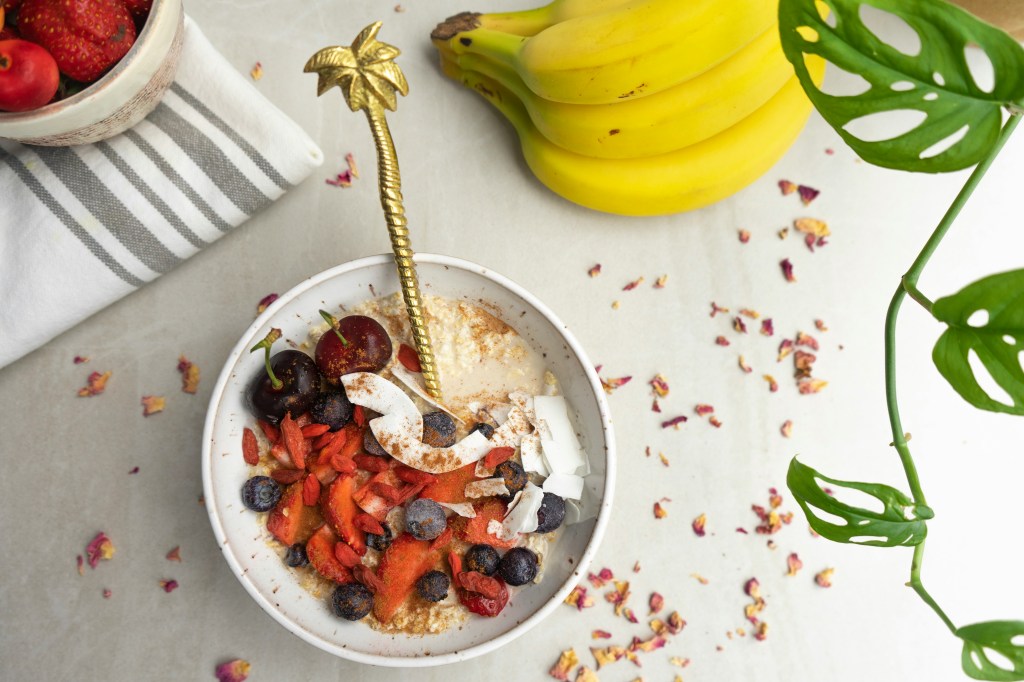
Gut health: Gut health is so important for keeping your detoxification system healthy. Prebiotics is a type of fibre that feeds the good bacteria in your gut. Eating foods rich in prebiotics can keep your immune and detoxification systems healthy. Good food sources of prebiotics include tomatoes, artichokes, bananas, asparagus, onions, garlic, and oats.
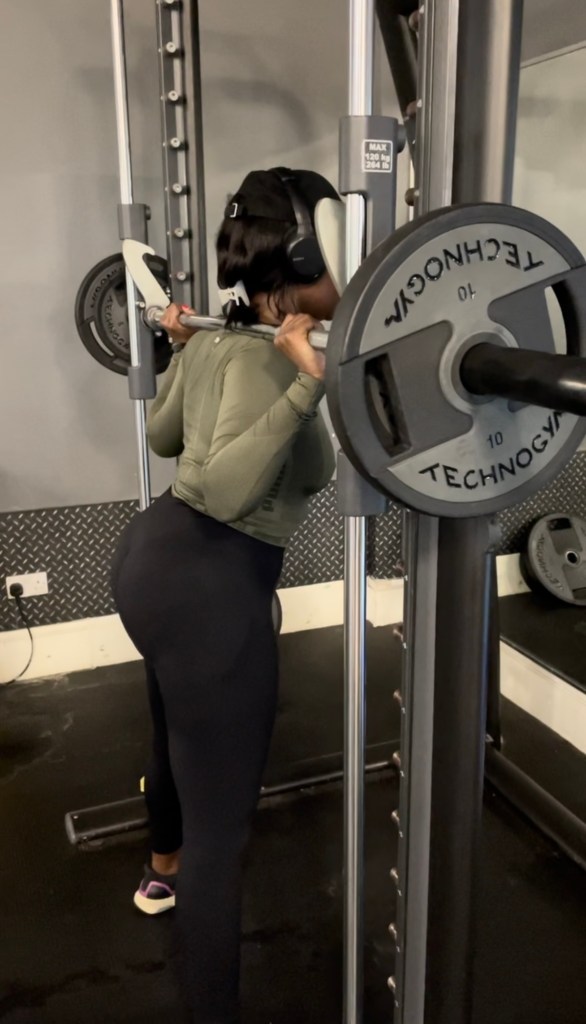
If you want to improve your health It is said that weight training is a way to achieve this. It involves using one or more muscle groups. Weight training is also known as strength training, resistance training, and muscular training. The definition of strength training is any physical movement in which you use your body weight such as, lifting weights, dumbbells, resistance bands or circuit training. This builds muscle mass, strength and endurance.
Makes you stronger: Strength training helps you become stronger. It helps improve performance in sports that require speed, power, and strength. Gaining strength allows you to perform everyday tasks much easier, such as carrying heavy shopping bags or running / walking up a flight of stairs.
Makes your bones stronger: Weight-bearing exercises put temporary stress on your bones, sending a message to bone-building cells to take action and rebuild bones stronger. Having strong bones reduces your risk of osteoporosis, fractures, and falls, especially as you age. The great news is, you can reap the bone-strengthening benefits of strength training at any age.
Improves your mood: It is said that regular weight training may boost your mood and improve your mental health such as reduce anxiety. The great thing about exercise is that it releases endorphins, which can put you in a great and positive mood.
(Photo credit: Delaney-Van)
Can help you appear leaner: When building more muscle and losing fat, you will appear leaner. Losing body fat and building stronger and larger muscles will achieve more muscle definition, creating a stronger and leaner appearance.
(Photo credit: Alexandra Tran)
Boosts your self-esteem: Strength training can add a boost to your self-confidence. It helps you overcome challenges, work towards a goal, and appreciate your body’s strength. It can increase your self-efficacy, the belief that you’re able to succeed at or perform a task which can improve your confidence.
There are many things we need to tackle daily. Emails, meetings, errands, making meals. The list is endless. Clearing your mind is a great way to reinvigorate yourself and complete your tasks to the best of your ability. Anxiety usually rises when we’re weighed down with worries, thoughts and upcoming projects. And to be completely honest life itself can be full of many challenges. Making time for yourself and your mind should be the number one go too. If your mind is not a 100% how can you be your best self.
It’s ok to say no: There are always things happening constantly in our day to day lives. Catching up with friends, family and work commitments. As the days go by it is easy to get caught up, and when you eventually stop you realise half of the year has gone by already. In life we have to prioritise and make decisions and you can’t always say yes. It’s ok to put your needs first and it’s ok to say no, especially if you are feeling rundown and overwhelmed. Saying no will reduce your stress, leave your mind clearer and leave you with valuable time for yourself. You can’t help others if you don’t take care of yourself first.
Take a break: Stepping away from phones, computer screens and what you’re currently working on will help you find space for whatever types of rest you need throughout the day. Plus, it will enhance your attention when you return to it. Take a deep breath when you can, do a short guided meditation, go out into the fresh air for a walk or run, read a chapter from your book, listen to music or take a nap. These are great ways to get things off your mind and improve memory.
(Photo credit: Jessica-Lewis)
Make a to-do list: Writing down what you need to accomplish in a day and even in life will help you stay organised and on track. Doing this lets you empty your thoughts on paper, freeing up space in your mind. By writing things down, that thought will no longer pop into your head every few days or hours.
(Photo credit: priscilla-du-preez)
Vocalise how you feel: We all need a little extra help from time to time. Even If you need to speak to someone other than friends and family, seek medical advice from a doctor or a therapist. Be honest about what you’re experiencing — to yourself, and others, too. If you’re feeling overwhelmed say so. Acknowledging and vocalising how you’re feeling will keep your mind at ease.
Pilates is a form of exercise which concentrates on strengthening the body with an emphasis on core strength. It helps to improve general fitness and overall well-being. Similar to Yoga, Pilates concentrates on posture, balance and flexibility. This form of exercise was developed by Joseph Pilates in Germany, who believed that physical and mental health were closely connected.
Although there are similarities between yoga and Pilates as they both focus on the mind-body connection, yoga tends to focus more on spiritual well being. It is a more relaxing form of exercise whereas Pilates is more physical and focuses on toning and strengthening.
Photo credit: Ginny Rose Stewart
Practicing Pilates on a regular basis provides plenty of well-rounded benefits. The great thing is that Pilates can be enjoyed by anyone and at any age. If you’re a beginner you can start with the more easier exercises and then once you’ve mastered those, you can work on the advanced moves. Always check with your health professional if you haven’t exercised for a while, are older or pregnant, or have health problems.
Good posture – Pilates will teach you to gain and maintain good posture. The exercises require that your body is always in alignment. This is especially beneficial if you suffer from lower back pain.
Clears the mind and improves your mood – Pilates focuses on providing balance between your mind and body, it gives you an overall sense of well-being. Pilates can improve your mood as physical activity causes endorphins to be released and causes a positive feeling in the body. Some scientists believe that being active can enhance wellbeing as it brings about a sense of better self-confidence and self-control.
Muscle Tone – The exercises involve the use of muscles that you may not use on a daily basis. After the initial soreness, you’ll find that your muscles will be much more toned.
Flat abdominal muscles – As Pilates focuses on strengthening your core which includes your abdominal muscles, you’ll find that one of the benefits of Pilates is that it will result in a flat stomach.
Flexibility – As we age we tend to lose the flexibility we had when we were younger. Pilates is said to restore your flexibility. After a while you’ll be amazed at how much more flexible your body has become.
Improves your balance – Through the mind-body connection, you will become much more aware of how your body moves and performs. Pilates not only improves your physical balance through correct posture but will also restore your mind-body balance.
Reduces stress – When doing the exercises, you’ll be in the moment and won’t be able to think about all those responsibilities that weigh you down on a day to day basis. You’ll be more focused on your breathing and on the moves that you are making with your body. This is one of the best ways to relieve stress.
Invest in yourself: Always make time for you, it may sound a bit cliche but not taking care of yourself won’t give you the ability to be your best self in everyday life. This is easier said then done, as the days can disappear before our eyes so quickly… I mean we are at the end of January already! Try and find ways to show yourself some love and keep your stress levels down, whether it’s getting your hair done, buying that new outfit or a piece of jewelry you’ve had your eye on. Retail therapy can be a good remedy to feel good. Lastly investing in your wellness, for example vitamins is a good way to get through those long winter days. We have a lot of vitamins and minerals in our foods, but if you are suffering with those January blues and needing that extra boost, invest in the vitamins you need to help give you energy.
Make time for sleep: Getting enough sleep is one of the most important health benefits ever! It reduces stress and improves your mood, leaving you refreshed and alert for the day ahead. Without enough sleep the brain cannot function properly. A healthy sleep also helps the body remain healthy. It’s not easy for us all to drift off to sleepy land straight away and to get in the recommended six to nine hours a night, but if you try getting into bed at a decent hour most nights, and making it a point to shut out all the distractions such as phones, you may see a difference. Enjoying a hot bath with your favorite bath salts is a great way to help sooth the muscles, unwind and clear the mind. We love spraying lavender mist on our pillows before sleep which helps get us to sleep quicker. If that’s not for you, you can never go wrong with a good book before bed.
(Photo credit: Susan Wilkinson)
Choosing healthier food options: We’re not fans of diets and tend to eat what we want and also enjoy, all in moderation of course! If you are watching what you eat then the best way to monitor this is by evaluating the time of day you have your meals. We find that when we make time for breakfast, lunch and dinner we snack less during the day. A substantial breakfast is not on the cards for us every day due to busy mornings. When on the go grab that banana or fruit pot so you don’t miss out. Try eating at fixed meal times daily, this will help control your hunger. Just have fun with your meals, we are foodies and like a variety of different cuisines. Experiment more in the kitchen and bring fresh tastes to your dining room table.
(Photo credit: Claudia Soares)
Exercise: Being able to fit the time in to even get to the gym a few times a week is a miracle. So when life gets hectic, being physically active throughout the day helps. You don’t need to hit the gym every day to burn calories, deciding to take the stairs over the lift, taking a half an hour brisk walk at lunchtime. And even try a ten minute quick Yoga and Pilates session first thing in the morning or just before bed at the end of the day. Sticking with this routine will keep your fitness levels on track.
Mind and soul: We all have our own way to de-stress, clearing the mind is also important for overall health. Learning to switch off from your day fully is a mindset, to achieve this, you can meditate, pursue a hobby, listen to music and watch a great tv series. Why not treat yourself to the cinema or theatre. Put yourself first, when you try to do that you will feel happier and be able to tackle whatever life throws at you.
The Coronavirus Pandemic has had an impact on all of our lives one way or another. Making our anxiety and stress levels reach that all time high. Some of us, feeling worried as we are not sure what tomorrow’s news may bring, bored by staring at the same walls day in and day out. You may live alone and feel lonely, which can then turn into frustration as all you want to do is see and hug your loved ones. For most of us, these feelings will pass and we have for you a few easy little steps you can do in the comfort of your home and to help point you in the right direction.
Meditation: Finding time for you is always beneficial and meditation is a way where you can do this. Meditation can be practiced at any time of the day, we’re not saying to spend hours meditating but, ten minutes a day will keep those cobwebs at bay. A good time to practice is first thing in the morning or just before bedtime. Even If you need a few minutes to yourself during the day, doing a short meditation on your lunch break will give you that time out you need. There are great meditation apps for mindfulness such as Calm and Headspace. YouTube is a great way to find short meditation videos too.
(Photo credit: Lesly Juarez)
Stay connected with friends and family: We have all been using Zoom more than ever this past year. Whether that being holding evening quizzes, meetings, celebrating birthdays and baby showers. We all need to feel connected, so keep in touch with friends and family and try reconnecting with old friends. Doing this more times than not should make you feel a little better as you can catch up and have a good laugh, which is so needed.
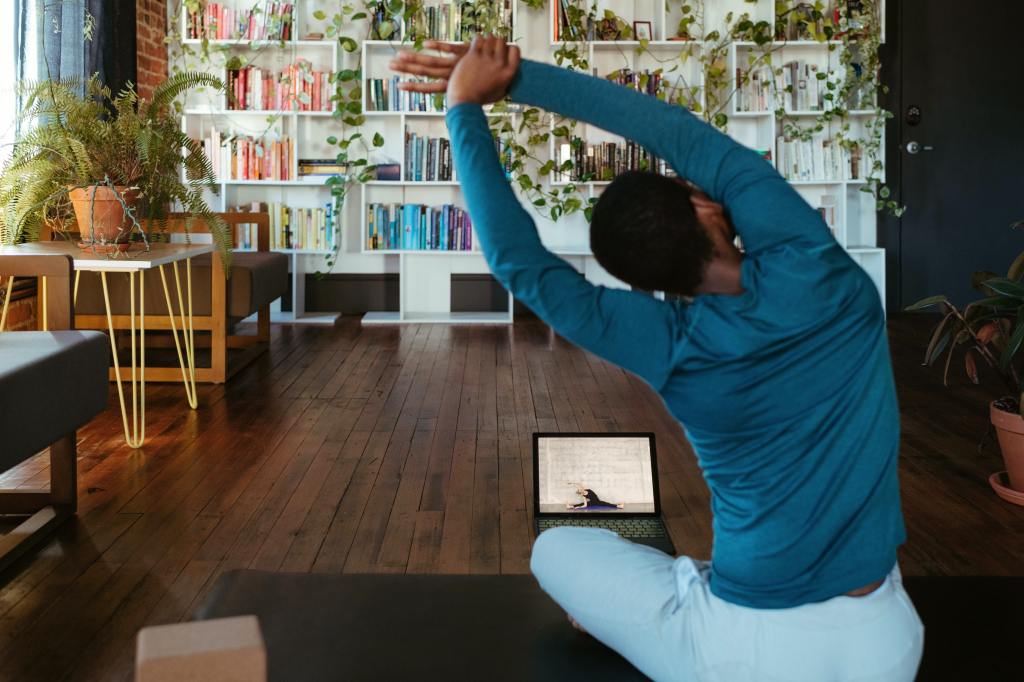
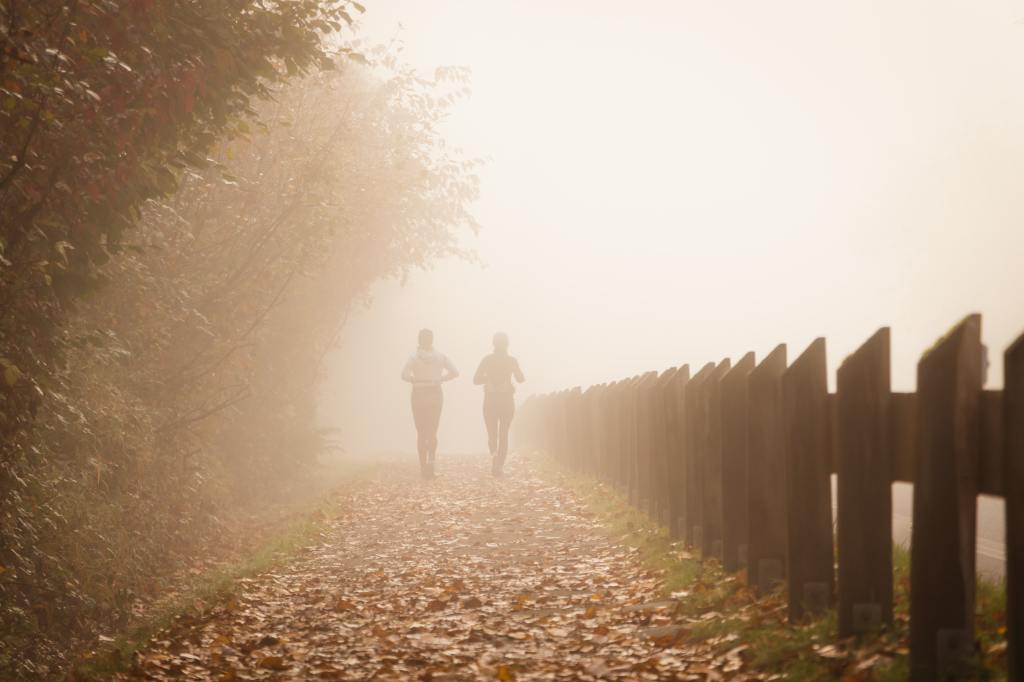
Physical health: Our physical fitness has a major impact on how we feel, so looking after our bodies the best way we can is important. It’s so easy to fall into unhealthy patterns in lockdown but you have to just have the mindset to keep your physical fitness going. Try to exercise regularly, this can be as easy as an online ten-minute Yoga and Pilates class, a high intensity half hour cardio session, hitting the pavement for a jog, a daily walk or bike ride helps with fitness and also clears your mind. Eating healthily and preparing a well-balanced, nutritious meal always makes you feel great. As well as drinking lots of water.
(Photo credit: Greg Rosenke)
Make time for yourself: This can include anything, think of things that you really enjoy and that relaxes you. Listening and dancing around to your favourite music always helps, as well as releasing those feel good endorphins. Doing this for as long as you want whilst dancing around like no one is watching is the best thing ever! Reading books can make your mind wonder to a different place. A great book is a good feel factor and whilst doing this why not run a hot bath and enjoy your book whilst soaking your body at the same time. Pamper yourself. This can be facials, giving yourself a manicure and pedicure, masks and hair masks. Looking after you is the way forward. Lastly try out that new recipe you have seen. Cooking a great meal or even baking for yourself and for those you live with is a good way to get those culinary skills on point as well as having a full stomach too!
(Photo credit: Sam Loyd)
Organising your space: They say an organised space is an organised mind, the more clutter you can see around you, the more easily you’ll find yourself distracted. Start by getting rid of the things you don’t need. There is a variety of different online ecommerce websites where you can sell clothes, electrical goods and many more. You may fancy a little revamp, why not give a room in your home a whole new makeover. Doing this will make you feel as though you have got something done, whilst feeling great about yourself at the same time.
Smoothies contain so many health benefits and can be enjoyed anytime of the day. A nutritious healthy smoothie at breakfast gives a good start to your day and energy you need to keep going until lunch time. Not only are smoothies tasty, we have so much fun making them as you can be so creative with it. One day you may fancy a green smoothie, a berry smoothie or even a banana, honey and milk smoothie. As Smoothies are packed with goodness and lots of flavour it also keeps you full which stops food cravings and prevent from snacking.
Smoothies after a workout is the best! Have you noticed you get hungry more after exercise? A smoothie is a healthy alternative to have after a workout. We like to add a scoop of protein powder which helps to build the muscle and repair tissue. This also thickens the smoothie and tastes more like a milkshake.
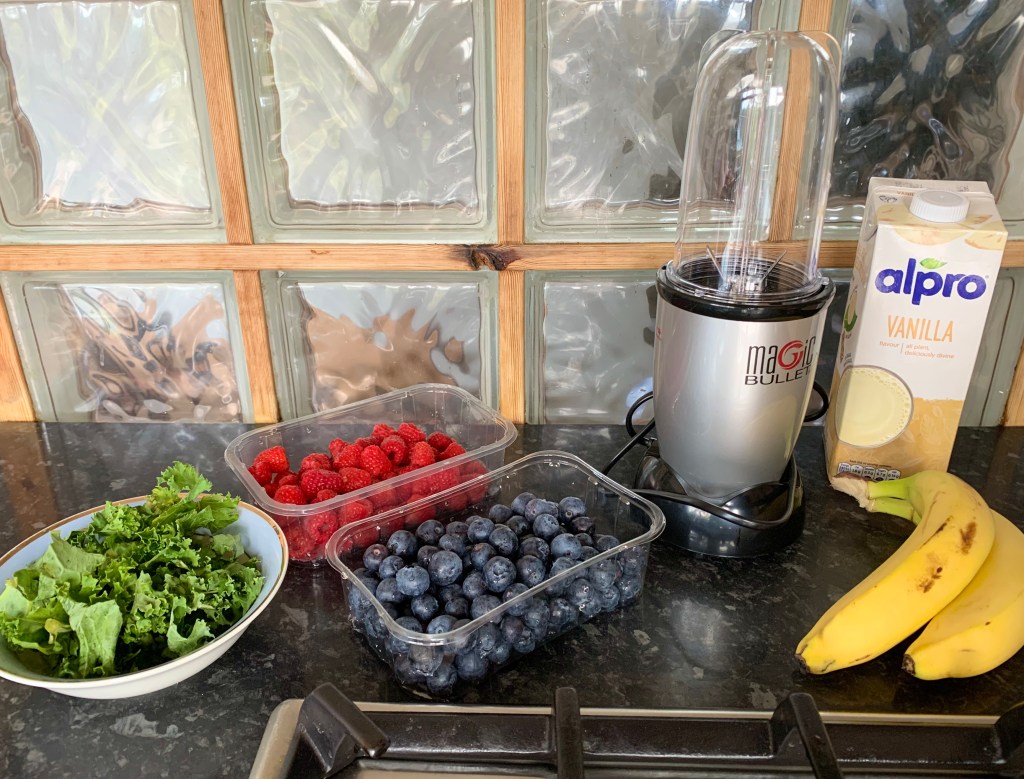
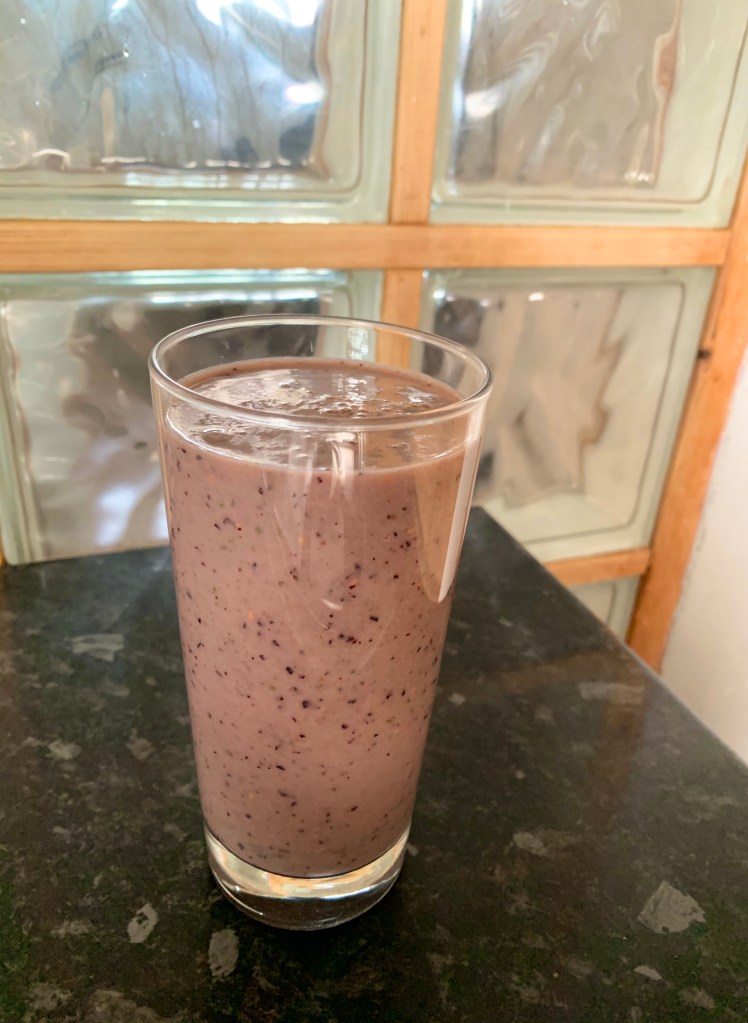
For breakfast today we made a kale, banana and berry smoothie which took no more than five minutes to make.
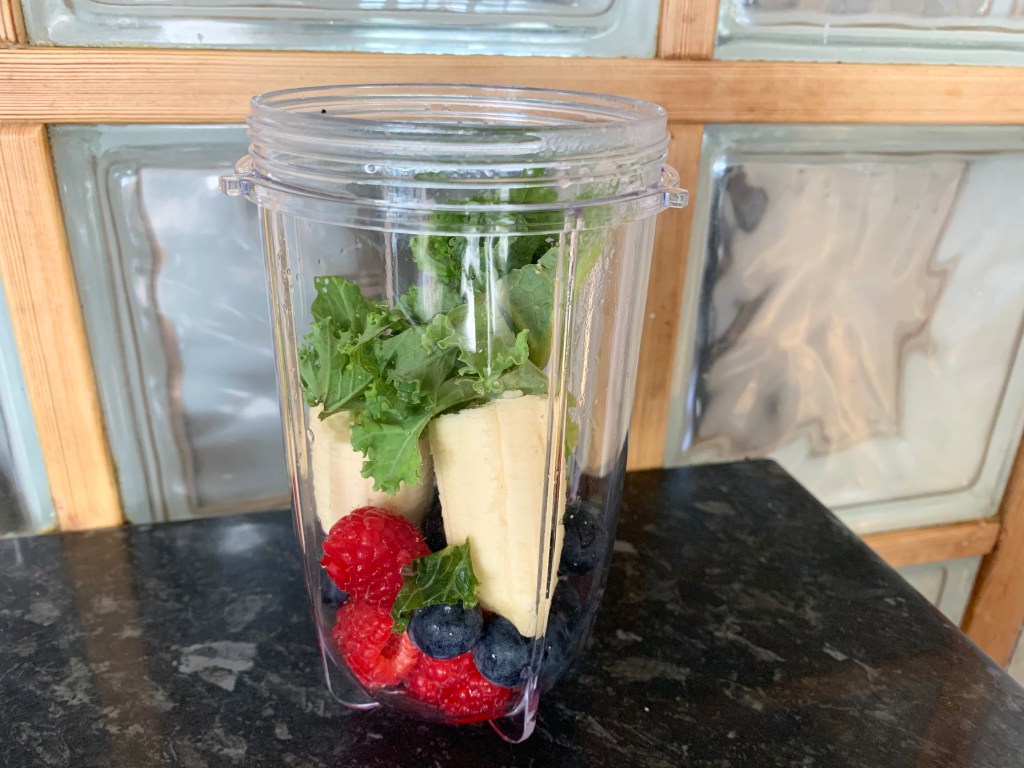
For the ingredients you only need a handful of fresh blueberries, raspberries and kale. One banana, half a cup of plant-based vanilla soya milk, a few ice cubes and a dash of water. If you have a sweet tooth you can add a teaspoon of honey.
Blend for around twenty seconds and there you have it – our easy to make berry smoothie.
Berry smoothie health benefits:
Raspberries are packed with vitamins, minerals and antioxidants. The fruit is low in calories but high in fibre.
Blueberries is great for a healthy digestion and feeling full. Blueberries contain iron, calcium, zinc and vitamin K.
Bananas give you energy and are a sources of vitamin C. Potassium in bananas is good for the heart and blood pressure.
Kale is one of the most popular vegetables, loaded with powerful antioxidants and is one of the best sources of vitamin K.















 Shelley&Michelle